Buying a used Model S or X? How the battery was actually used, how it was charged, the air suspension, and whether high-voltage safety survived any collision don't show up on a test drive. In a single on-site scan, T800 reads the car's own data into a plain evidence report you can take into a negotiation.
Beta · we reply within one business day · read-only OBD-II, no Tesla account.
Sample below is from a real 2017 Model X 100D — every figure read in a single session.
BMS lifetime ledger
Current battery state
Safety & mismatch flags
Air suspension · current state
How we decide what to report. We only promote signals that survive cross-checks against known tooling behavior, Tesla API snapshots, and physics-based consistency checks. Signals that fail are retired, not hidden — we even list what we deliberately do not claim.
No black-box score. Every line is a measured value with its data source shown — never a hidden 0–100 grade. Inferences (like a possible pack replacement) appear only as flags to investigate, never as accusations.
This is an evidence report — not a Tesla service replacement.
Request an inspection
Tell us the car. Inspection reports are in beta — we reply within one business day to set up the scan and answer questions.
Keeping the car? There's also trend evidence.
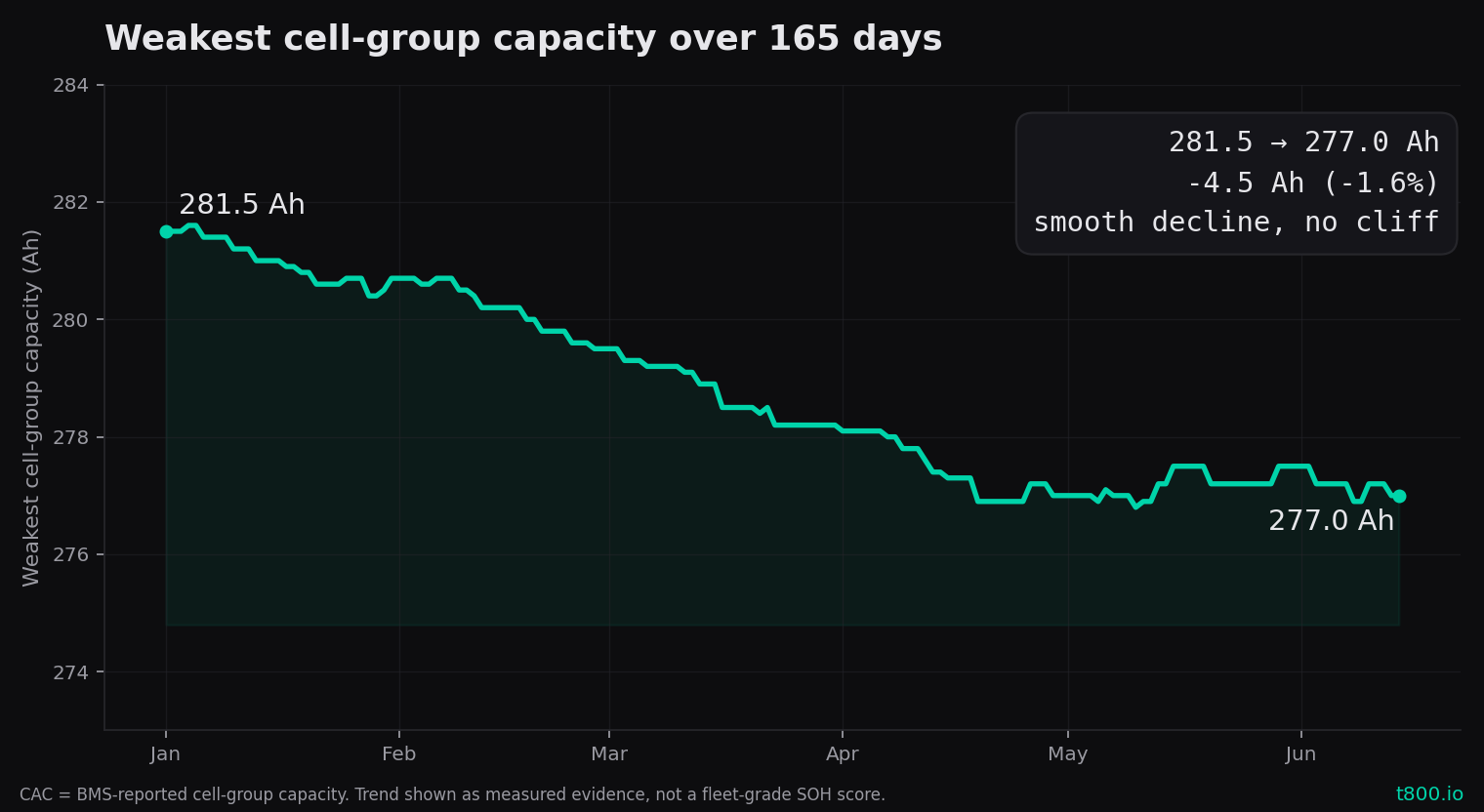
Some evidence only appears over time: compressor baselines, slow battery-capacity movement, recurring charge behavior, and whether a quiet car stays quiet.
Guardian turns your garage into a continuous monitoring station for the slow changes a same-day scan cannot see — battery drift, suspension baselines, and whether a quiet car stays quiet.
Prefer email? Write us directly at [email protected].